
Inside Egypt Journal
Weekly stories, discoveries and priority access to extraordinary journeys.
The Citadel of Qaitbay in Alexandria is a 15th-century Islamic fortress located on the Mediterranean coast at the eastern edge of Alexandria, Egypt, built by Sultan Al-Ashraf Qaitbay between 1477 and 1479 CE. The Citadel of Qaitbay stands on the original site of the ancient Lighthouse of Alexandria, one of the Seven Wonders of the Ancient World, and incorporates stones from the ruined lighthouse after earthquakes led to its collapse.
The Qaitbay Fortress played a crucial defensive role in protecting Egypt’s northern coast from Ottoman expansion and European naval threats during the late Mamluk period.
Culturally and architecturally, it represents a direct link between ancient and Islamic Alexandria, showcasing classic Mamluk military design with massive limestone walls, corner towers, and a central keep overlooking the sea.
Today, the Citadel of Qaitbay in Alexandria remains one of the city’s most important landmarks, symbolizing its strategic significance, layered heritage, and enduring Mediterranean identity.
See the citadel up-close on our 15-day Egypt tour! Book your Egypt tour package!
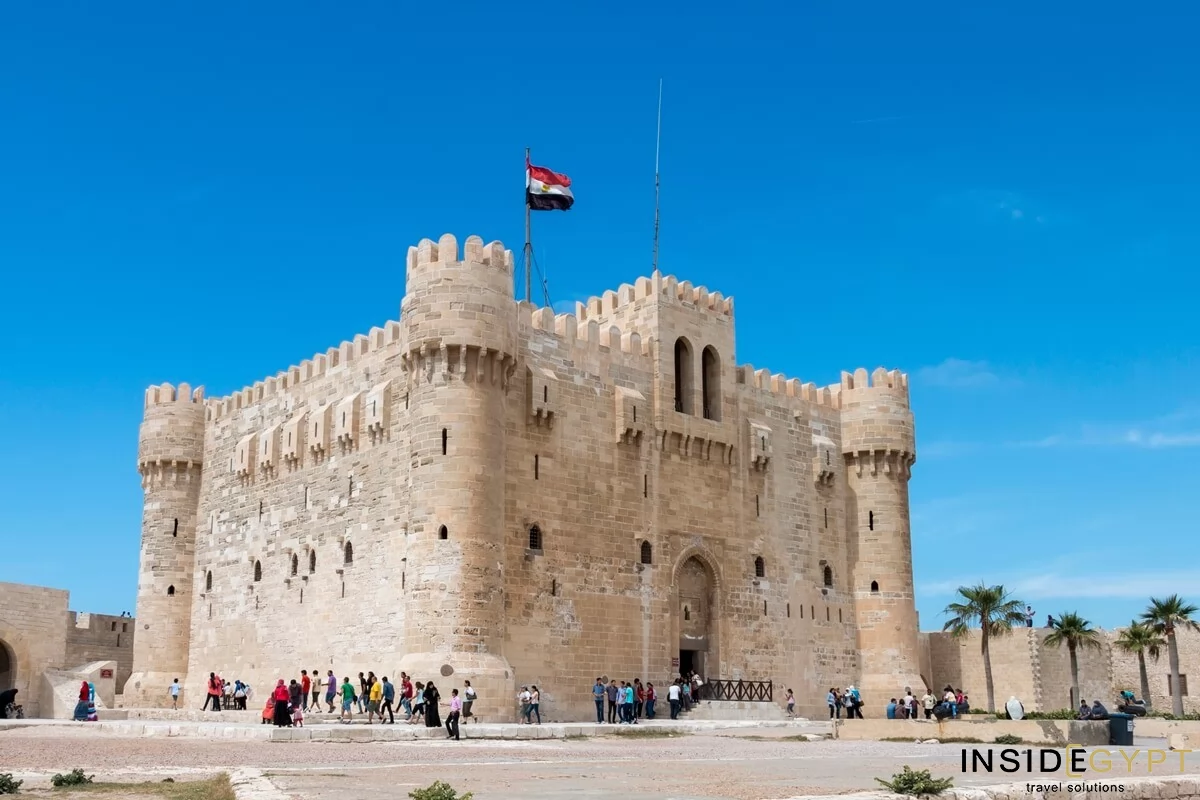
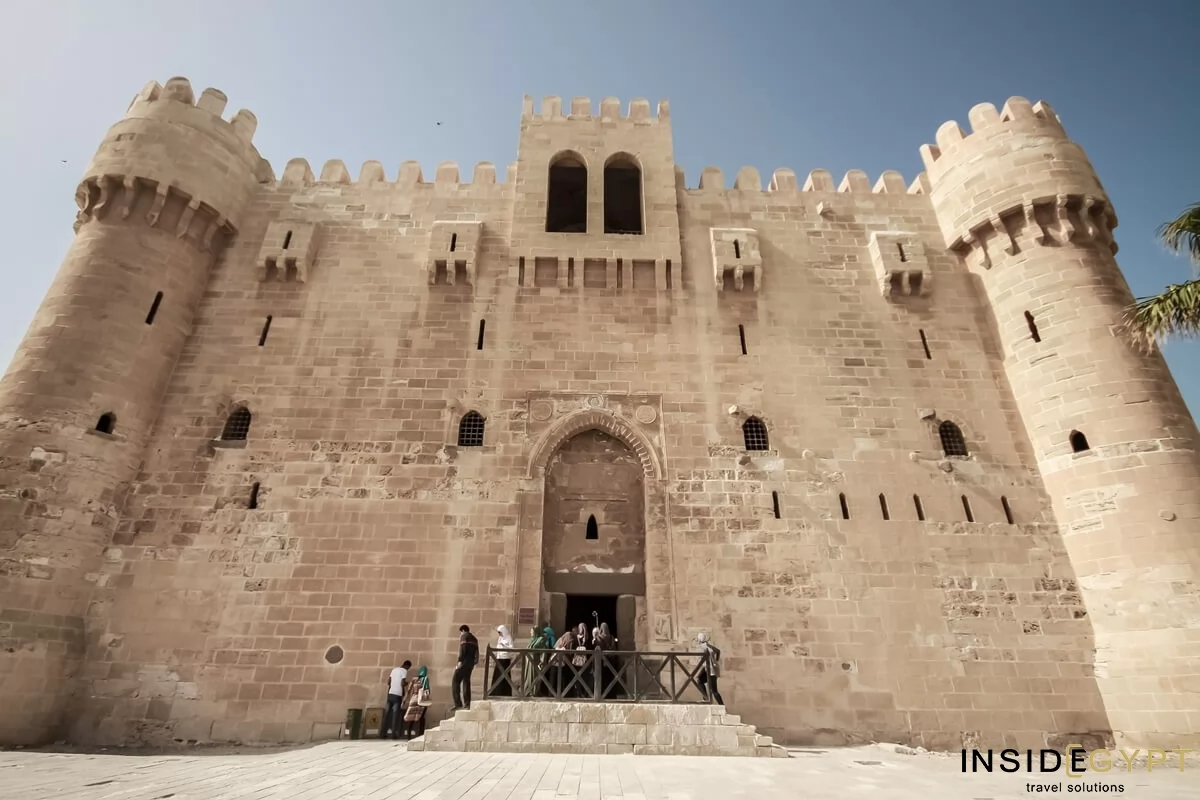
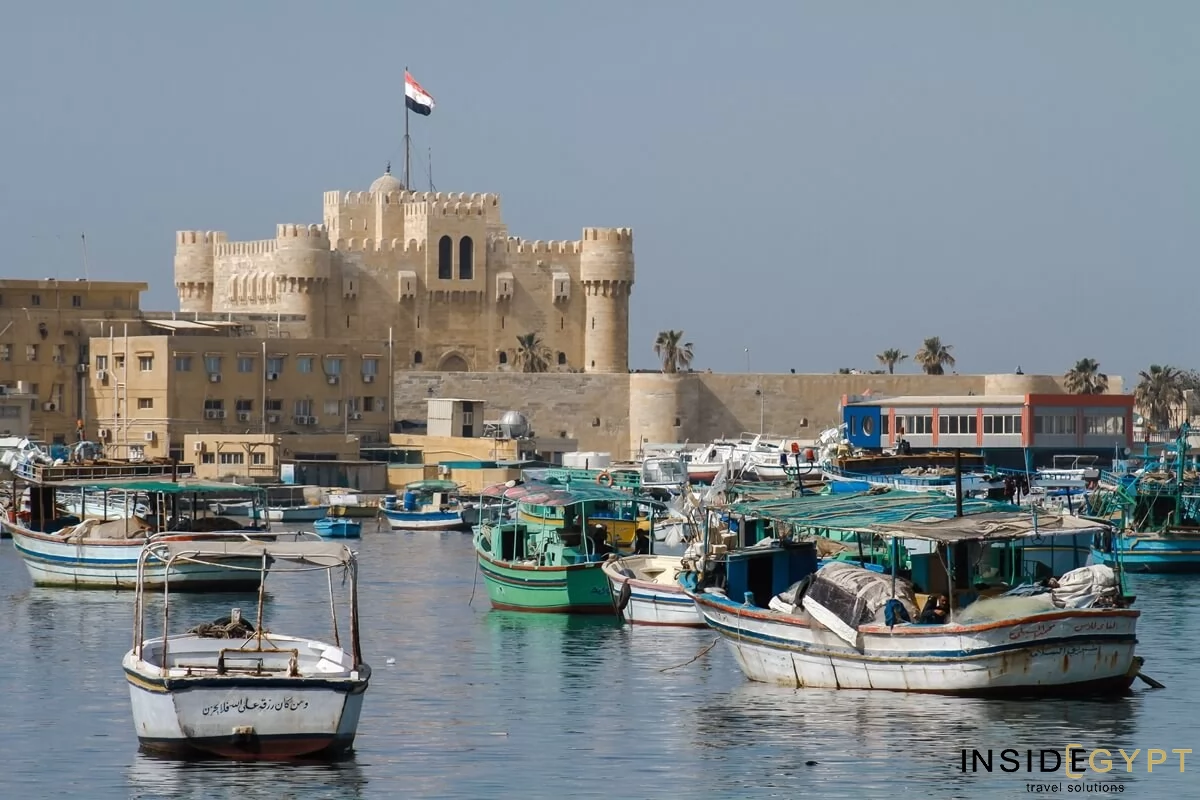

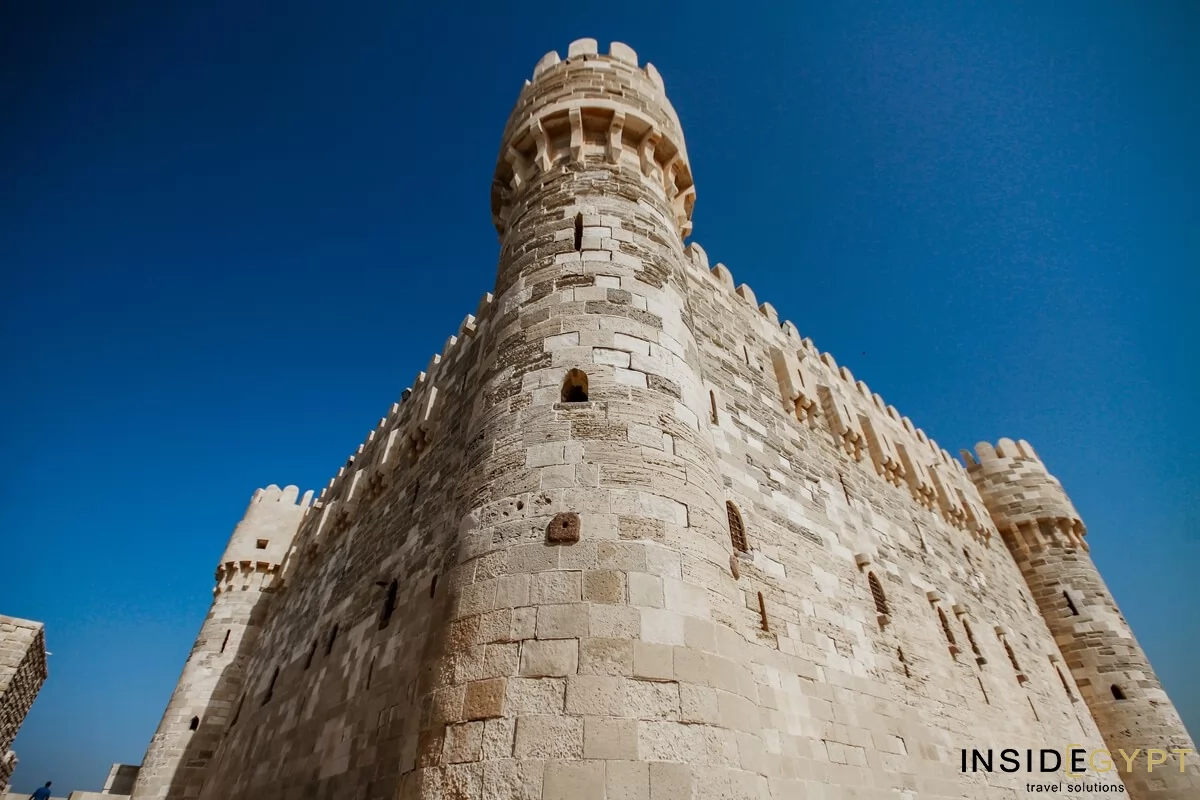
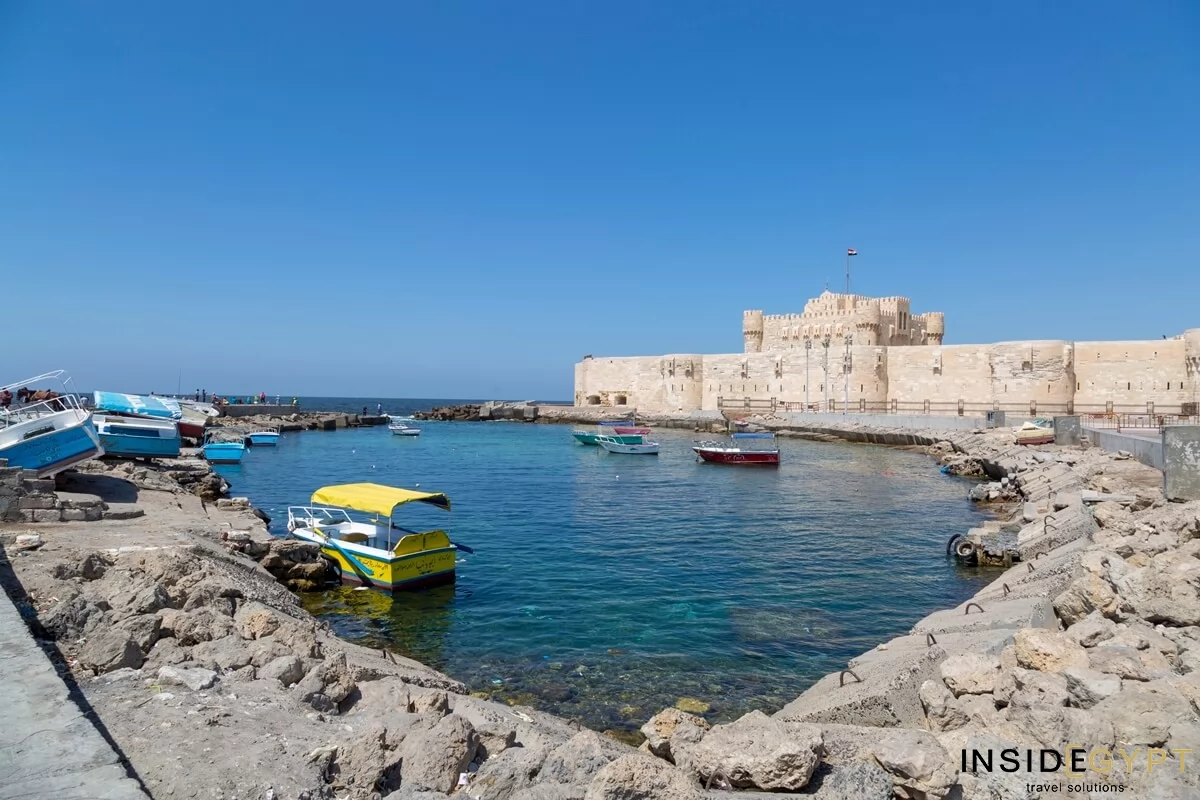
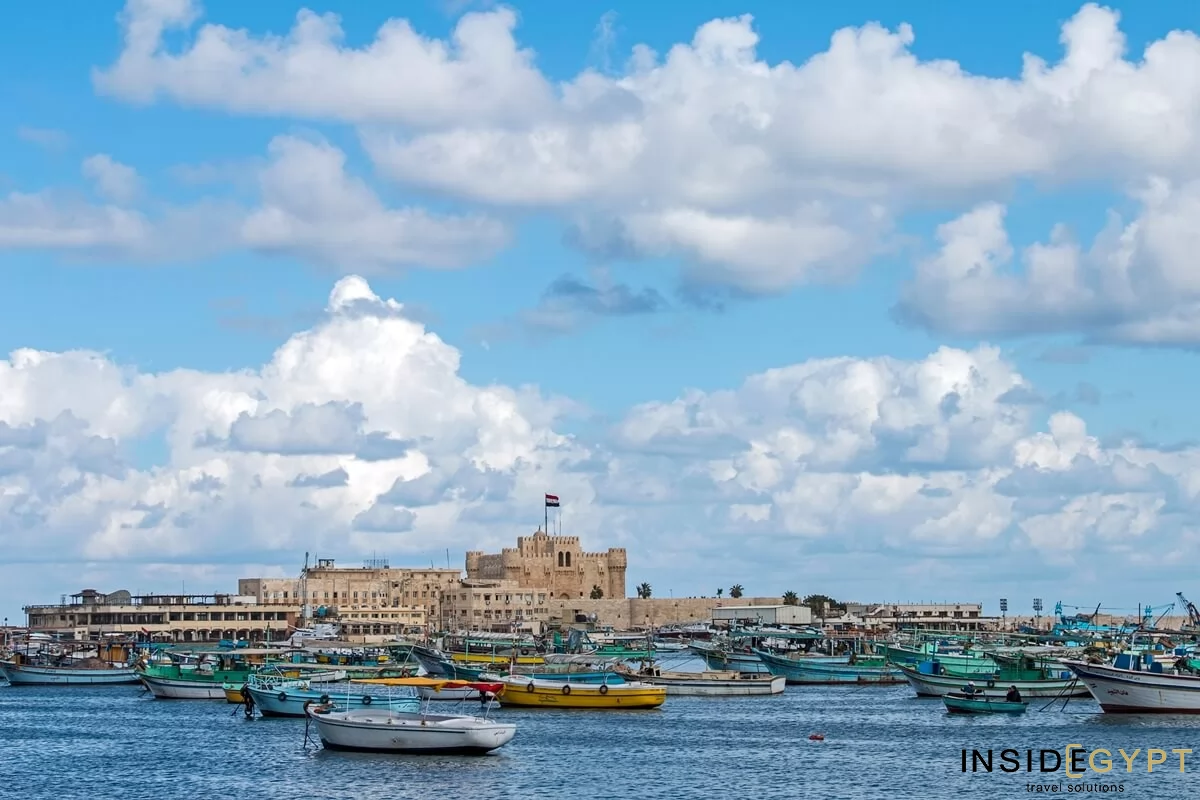
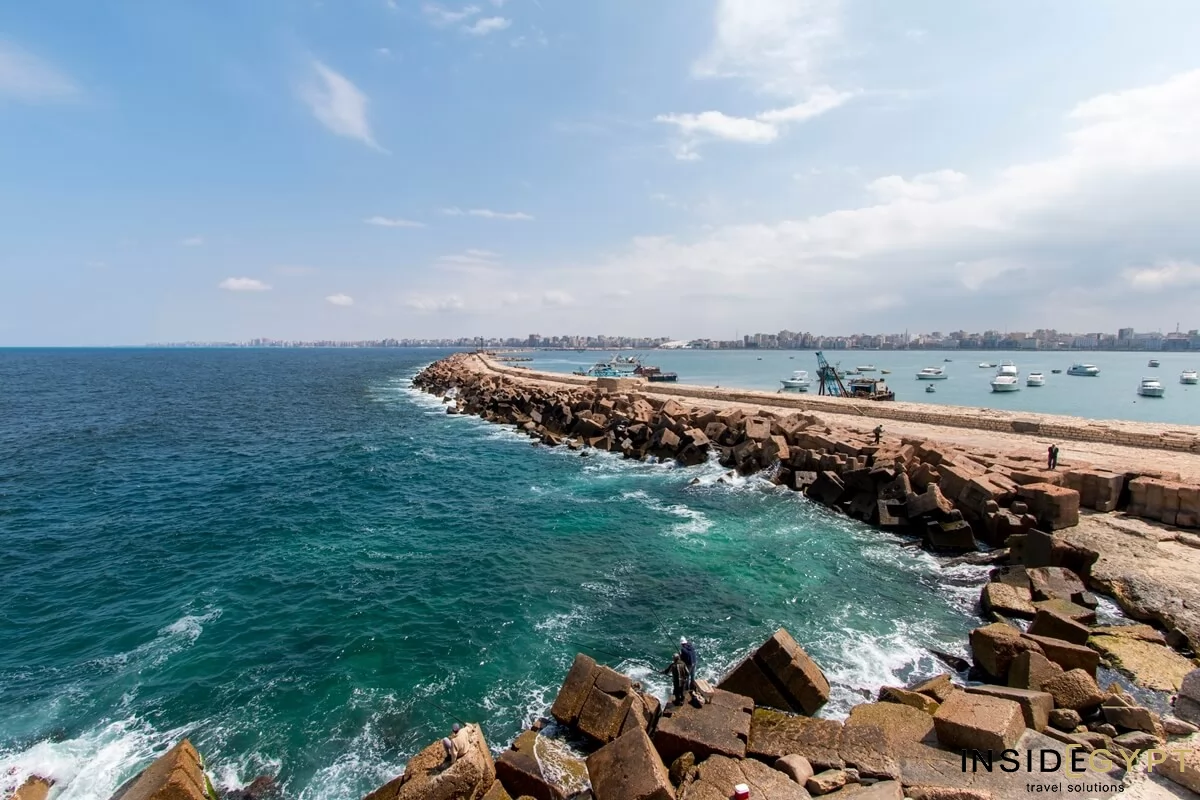
The Citadel of Qaitbay in Alexandria is a 15th-century Mamluk fortress built on the Lighthouse of Alexandria site, where the ancient Pharos once stood. Constructed between 1477 and 1479 by Sultan Al-Ashraf Qaitbay, it was designed to defend Egypt’s Mediterranean coast from naval invasions during the late Mamluk period. Built partly from the remains of the fallen lighthouse, the citadel reflects the strategic and symbolic importance of Alexandria as a historic port city. Today, it is one of the most prominent Alexandria historic landmarks, representing the strength of Mamluk fortresses Egypt and serving as a key example of medieval Islamic military architecture. The citadel is also among the most visited Alexandria coastal attractions, linking the city’s ancient heritage with its Islamic past.
The Citadel of Qaitbay is historically important for its strategic role in defending Egypt’s Mediterranean coast during the late Mamluk period. The fortress formed part of a broader Mamluk coastal defense system designed to counter growing Ottoman naval power and European incursions. The Qaitbay Citadel history also reflects Alexandria’s continued military and economic importance after centuries of decline following the medieval period. Its construction on the former site of the Lighthouse of Alexandria gives it strong symbolic value, marking the transition from ancient maritime dominance to Islamic-era fortification. Using stone from the ruined lighthouse, the citadel physically and historically links one of antiquity’s greatest monuments with Mamluk military architecture, emphasizing continuity rather than legend in Alexandria’s layered past.
Yes, the Citadel of Qaitbay is worth visiting, especially for history enthusiasts interested in a well-preserved example of Mamluk defensive architecture. Guided tours enhance understanding oflate medieval military design, highlighting features such as thick stone walls, corner towers, and a central keep. Photographers and casual visitors benefit from its open courtyards and elevated position, offering expansive Mediterranean Sea views. For first-time visitors, the citadel provides clear historical context without requiring specialized knowledge, particularly when explored through guided tours in Alexandria, which explain its Mamluk origins and coastal defense role. Its compact layout and waterfront setting make it a practical, informative stop that combines architectural, historical, and scenic value in one location.
For heritage context, see UNESCO: https://whc.unesco.org/en/tentativelists/1822/
A typical visit to the Citadel of Qaitbay in Alexandria takes about 45 to 90 minutes, depending on how thoroughly you explore the site. Visitors who walk through the fortress independently usually spend around 45–60 minutes viewing the main towers, inner courtyard, and coastal viewpoints. Those who join a guided visit or take time to read on-site displays often extend their stay to 75–90 minutes, as guides provide added historical context about the Mamluk period and the citadel’s defensive role. If you enjoy photography or lingering along the sea-facing walls, plan closer to the upper end of that range. As one of the most accessible things to do in Alexandria Egypt, the citadel fits easily into a half-day itinerary without feeling rushed.
Inside the Citadel of Qaitbay in Alexandria, visitors explore several well-defined features that illustrate its military and architectural function. The outer defensive walls and corner towers of the Fort Qaitbay reveal classic Mamluk fortification techniques designed to control sea and land approaches. The central courtyard provides insight into how troops moved and assembled within the fortress. A small mosque, built for the garrison, reflects the integration of religious space into military life. Climbing the towers of the Qaitbay Fortress leads to elevated Mediterranean viewpoints, offering clear sightlines once used for naval surveillance and now valued for their panoramic coastal views. Together, these elements create a coherent picture of how the citadel functioned as a defensive stronghold rather than a ceremonial monument.
Yes. The Citadel of Qaitbay in Alexandria was built on the original site of the Lighthouse of Alexandria (Pharos). Scholars agree the lighthouse’s location is certain, with the citadel occupying the Pharos site, even though its exact design remains debated.
Historical records state that Sultan Qaitbay reused stone from the ruined Pharos when constructing the citadel in the 15th century. Medieval Arab historians consistently place the Pharos on the same promontory at the eastern tip of Pharos Island. Underwater archaeology around the citadel has recovered massive architectural blocks (e.g. statues, columns, and masonry) matching Hellenistic construction techniques and scale consistent with the lighthouse.
For a detailed academic overview, see Encyclopaedia Britannica: https://www.britannica.com/topic/lighthouse-of-Alexandria
Partly, with important limitations. The Citadel of Qaitbay in Alexandria can be enjoyable for families and generally fit visitors, but it is not well suited for older people or those with mobility issues.
Accessibility facts:
Practical tips:
Wear sturdy, non-slip footwear, take breaks, and visit in the early morning to avoid heat and crowds. Families with older children usually manage well, but seniors may prefer enjoying the exterior views only.