
Inside Egypt Journal
Weekly stories, discoveries and priority access to extraordinary journeys.
Last updated: July 2026
If you're wondering whether Alexandria, Egypt is safe for tourists right now, the short answer is yes. Alexandria is generally safe for most visitors who follow standard travel safety precautions in Egypt.
Many travelers search for “Is Alexandria, Egypt safe?” before deciding whether to book their trip, especially when international headlines make the region seem more unstable than it actually is.
When evaluating Alexandria, Egypt's safety, it’s important to separate national-level headlines from the practical, on-the-ground experience visitors actually have. It is not risk-free, but the overall risk level for visitors is moderate, comparable to that of other large Mediterranean or developing-world cities.
The question “Is Alexandria, Egypt safe?” cannot be answered with a simple yes or no. It requires context, geography, and an understanding of how tourism functions locally.
In practice, travelers experience far more logistical friction than physical danger. Cafés are busy. The Corniche fills with families at sunset. Cultural sites operate normally. The risks that make headlines are rarely the ones visitors encounter day to day.
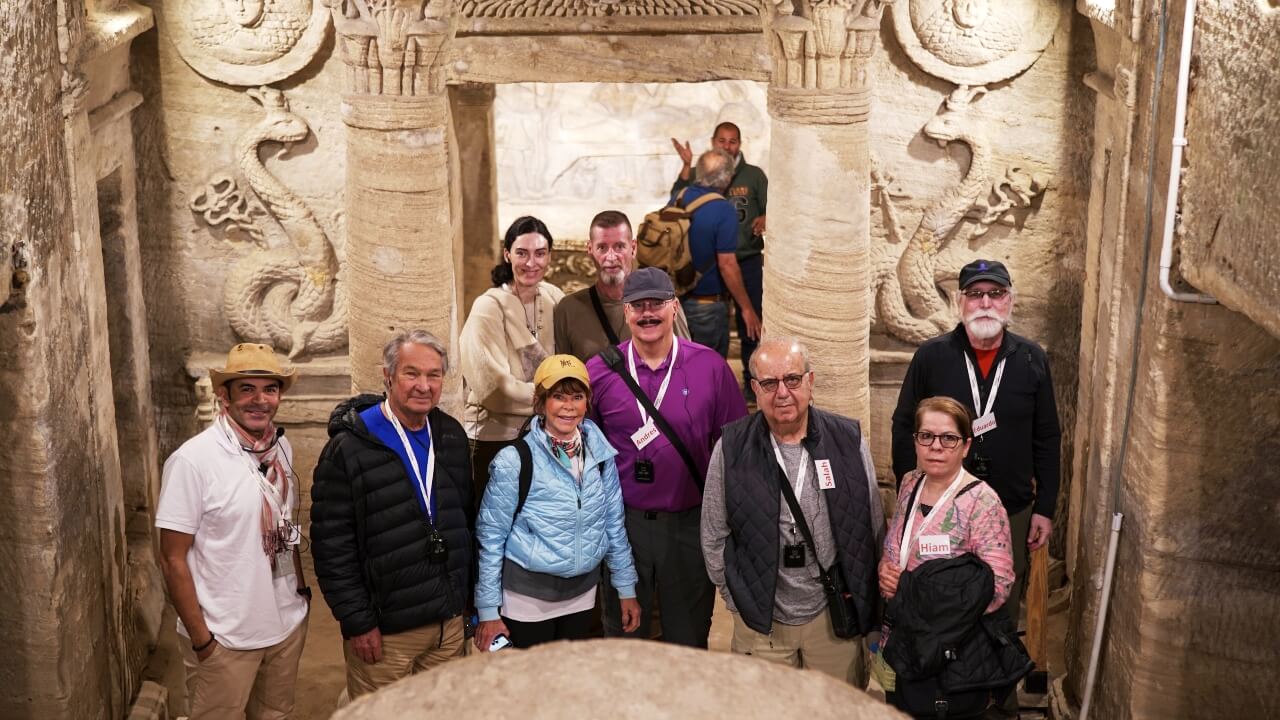
Over the years, we have guided hundreds of guests through Alexandria without incident, giving us a clear on-the-ground perspective on what travelers actually experience in the city.
The key difference between hesitation and confidence is understanding what the real risks are and what they are not.
For travelers planning a trip to Egypt, Alexandria remains one of the country’s most relaxed and accessible coastal destinations.
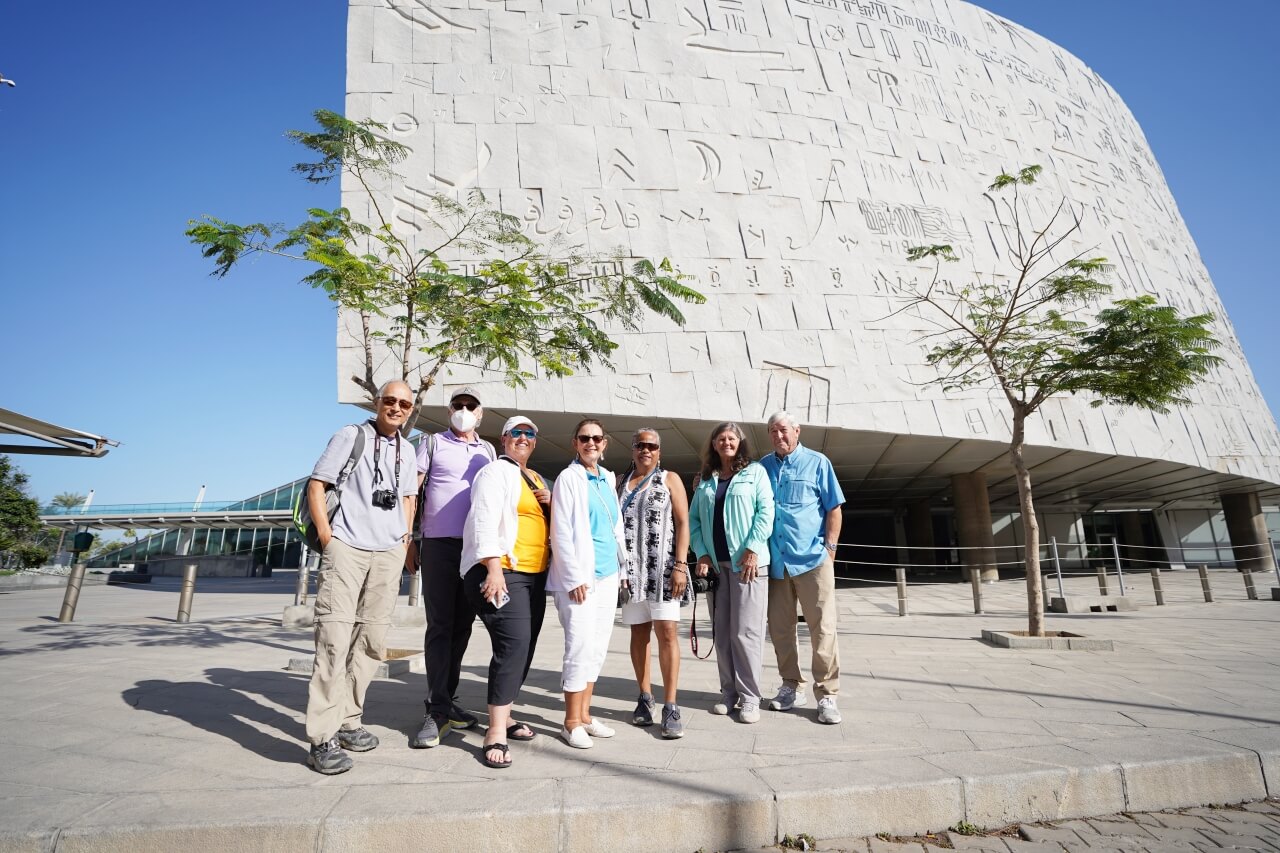
Yes, Alexandria is generally safe to visit right now for most tourists who follow standard travel precautions. The city’s main coastal districts, including the Corniche, Bibliotheca Alexandrina, and central waterfront areas, continue to operate normally and remain popular with both local residents and international visitors.
Most travelers visiting Alexandria encounter the same kinds of challenges found in many large coastal cities: transportation logistics, occasional taxi overcharging, crowded public spaces, and minor scams. Serious crime affecting tourists is rare.
For visitors staying in central districts, using common-sense precautions and planning transportation in advance, Alexandria remains a comfortable and rewarding destination to explore.
Alexandria is generally safe for tourists today, particularly along the coast and in central districts.
Let’s separate perception from reality.
Perceived risk (what headlines emphasize):
Practical risk (what travelers actually encounter):
Violent crime against tourists is rare. Crime rates affecting visitors are low compared to many global cities of similar size.
Compared to Cairo, Alexandria feels noticeably calmer, less congested, and less intense. If you're specifically evaluating Cairo, you can read our detailed Cairo safety guide.
For many travelers, Alexandria feels more relaxed and easier to navigate than the capital.
Government travel advisories often influence how travelers perceive risk. However, these advisories are written at a national level and do not always reflect the day-to-day reality in specific cities like Alexandria.
Most English-speaking travelers consult official guidance before booking. Understanding what these advisories actually mean, and how to interpret them is key to assessing risk realistically rather than emotionally.
The sections below explain how to read advisory language in practical terms.
The U.S. State Department and the Government of Canada currently list Egypt under elevated caution categories:
When advisories say “Reconsider Travel,” it does not mean “Do Not Travel.” These warnings are typically triggered by national security considerations, historical terrorism incidents, or instability in remote border regions, not by daily tourist conditions in Alexandria.
For visitors staying in central and coastal areas, this language reflects precautionary policy, not active tourist targeting.
Travel advisories are written conservatively to account for worst-case scenarios.
For travelers, they should be one input among several, alongside recent traveler reviews, local context, and logistical planning.
When combined with on-the-ground observations, tourism safety in Alexandria, Egypt, aligns more closely with normal urban travel precautions than with crisis conditions. For most visitors, whether Alexandria, Egypt is safe to travel to is a practical question of preparation rather than a matter of avoiding the destination entirely.
Understanding the difference prevents unnecessary fear while preserving awareness.
Travelers sometimes worry about whether conflicts in the Middle East affect travel to Alexandria. While regional tensions often appear in international news, daily life in Alexandria and other major Egyptian cities typically continues normally even during periods of heightened regional attention.
Following the military tensions between the United States and Iran in June and July 2026, some travelers have asked whether regional events affect travel to Alexandria. Although Egypt and Iran are both part of the broader Middle East, they do not share a border. Alexandria is located on Egypt's Mediterranean coast, approximately 1,800 km (1,120 miles) from Tehran. Understanding this distance helps put the geography into perspective. Throughout this period, Alexandria's main attractions, including the Corniche, Bibliotheca Alexandrina, Montaza Gardens, and the historic waterfront, have continued to welcome visitors as usual.
As with travel anywhere, visitors should stay informed before departure and follow official travel guidance. In practice, travelers visiting Alexandria generally encounter the same kinds of considerations found in many large coastal cities: transportation logistics, busy public areas, and common urban travel precautions.
Most safety concerns in Alexandria fall into predictable and manageable categories. Visitors are far more likely to encounter inconvenience than danger.
Knowing where issues typically arise and how to prevent them significantly lowers stress and improves confidence.
Pickpocketing in Alexandria is opportunistic rather than aggressive. It is most likely to occur in:
Tourists visibly carrying valuables are more likely to be targeted.
Practical precautions:
In well-traveled areas, simple situational awareness is usually sufficient to dramatically reduce risk.
Scams in Alexandria are typically low-level and easy to avoid with preparation.
Common scenarios include:
These situations are uncomfortable rather than dangerous.
Prevention strategies:
Preparation removes most friction.
Transportation confusion causes more anxiety than crime.
Not all taxis use meters, and negotiation may feel unfamiliar to first-time visitors. This creates stress even when there is no real safety threat.
To minimize issues:
When transportation is structured, perceived risk often disappears.
In central and coastal districts, Alexandria remains active after dark. The Corniche is lively with families, couples, and groups walking along the sea.
Extra awareness is advisable:
As in most cities, isolation increases vulnerability more than the location itself.
Staying in well-traveled areas at night keeps risk low and comfort high.
Many travelers researching whether Alexandria, Egypt, is safe are particularly concerned about solo travel and women’s experiences in the city.
Women may encounter verbal comments or attention. While this can feel uncomfortable, it rarely escalates into physical violence. Dressing modestly and walking confidently often reduces unwanted interaction.
The practical overall risk level remains low in central districts, especially when transportation and accommodation are pre-arranged.
For those who prefer additional structure, Inside Egypt offers Egypt tours for solo travelers, designed to combine independence with logistical coordination and expert guidance.
These experiences combine independence with logistical coordination, reducing both stress and decision fatigue.
The practical risk is low. The comfort level depends largely on preparation.
Transportation planning significantly shapes how safe a destination feels.
Ride-share apps provide transparent pricing
Local taxis require negotiation
Private drivers offer the highest coordination and ease
Pre-arranged transportation reduces decision fatigue, prevents fare disputes, and lowers uncertainty, particularly for first-time visitors.
Public buses and trains are widely used by residents and are not inherently unsafe. However, they may:
For short stays, many travelers prefer private or organized transportation for efficiency and clarity.
Understanding geography clarifies perceived versus practical risk.
In well-traveled areas such as:
Visible police presence and steady foot traffic contribute to a stable environment for visitors.
Staying in well-traveled areas significantly reduces exposure to petty crime and confusion.
Crowded markets and major transport hubs increase minor risks such as pickpocketing and confusion.
Congestion, not violence, is the most common challenge.
There are no official no-go zones for tourists within central Alexandria.
Higher advisory levels apply primarily to remote border regions in Egypt, not to Alexandria’s urban districts. For visitors staying in the main sightseeing areas, the overall risk level remains moderate and manageable.
Legal misunderstandings can create more serious problems than street crime.
Avoid photographing:
Drone use is heavily restricted and may require permits. Violations can result in confiscation or fines.
Respecting local customs when photographing individuals, particularly women, prevents unnecessary conflict. Awareness of cultural expectations is part of responsible travel and contributes directly to smoother experiences.
Independent travel in Alexandria is entirely possible. Many visitors do it successfully.
However, structured travel reduces certain stress points:
Safety becomes a byproduct of planning and local expertise, not fear.
At Inside Egypt, our structured itineraries keep travelers in well-traveled areas, proactively manage logistics, and remove common friction points. This does not mean independent travel is unsafe, it means expert coordination reduces exposure to minor risks and significantly lowers stress.
For many travelers, the difference between hesitation and confidence isn’t the destination, it’s the structure behind the journey.
That’s where thoughtful planning makes all the difference.
Alexandria With Confidence - Not Guesswork
Safety concerns rarely stop people from traveling.
Uncertainty does.
Inside Egypt’s small-group journeys, we design them to remove the most common stressors visitors face, from transportation logistics to navigating unfamiliar environments independently.
Our 15-Day Egypt Tour including Alexandria allows travelers to experience the city with expert guidance and structured planning throughout the journey.
In our other curated journeys, Alexandria is available as an optional final-day extension for travelers who wish to explore beyond the standard program.
Across all experiences, we provide:
You experience Alexandria fully, without negotiating taxis, worrying about routes, or second-guessing decisions.
If you’re considering Egypt and want structure, expertise, and reduced stress built into the experience, explore our curated luxury Egypt tours.
In general, many travelers consider Alexandria safer and calmer for tourists than Cairo. The city is smaller, less congested, and easier to navigate, which reduces stress and perceived risk, particularly for first-time visitors. For travelers still wondering if Alexandria, Egypt safe, the practical difference often comes down to congestion levels and overall pace rather than crime statistics.
While both cities require standard urban precautions, Alexandria typically feels more relaxed, with lighter traffic and fewer large crowds. That said, both destinations are manageable for travelers who stay in well-traveled areas and plan transportation in advance.
Yes, Alexandria is safe for American and European tourists right now with standard travel precautions in place. There is no evidence of systematic targeting of Western visitors in the city’s main tourist districts.
Government advisories encourage national-level caution, but daily life in Alexandria continues normally for international travelers. The most common issues visitors encounter are minor scams, taxi overcharging, or occasional pickpocketing, not violent crime.
As with travel anywhere, staying aware, respecting local customs, and arranging transportation thoughtfully significantly reduces risk.
