
Inside Egypt Journal
Weekly stories, discoveries and priority access to extraordinary journeys.
A major milestone in the preservation of Egypt’s ancient heritage has recently taken place in Luxor. Two colossal alabaster statues of King Amenhotep III have been officially unveiled following extensive restoration, reassembly, and reinstallation at their original location within the king’s mortuary temple on Luxor’s West Bank.
The event highlights decades of dedicated archaeological and conservation work aimed at safeguarding one of the most important monuments of ancient Egypt’s New Kingdom.
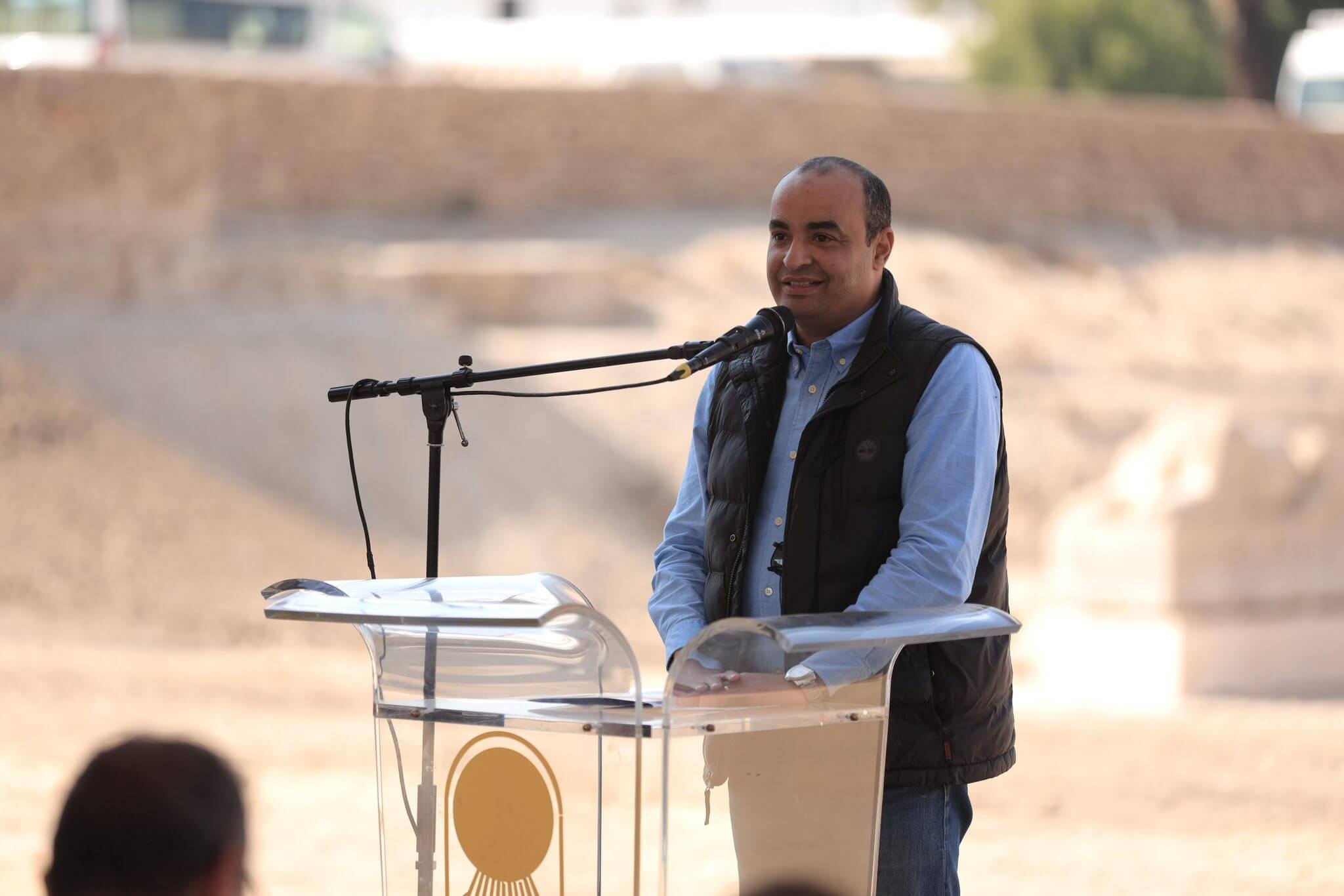
The unveiling ceremony was attended by Egypt’s Minister of Tourism and Antiquities, senior officials of the Supreme Council of Antiquities, and leading Egyptian and international archaeologists. The statues were restored and raised at their original position at the Third Pylon of Amenhotep III’s mortuary temple, known in antiquity as the “Temple of Millions of Years.”
Located on Luxor’s West Bank, near the Colossi of Memnon, the temple once stood as the largest and richest mortuary temple ever built in ancient Egypt.
The restoration forms part of the long-running conservation project of the Colossi of Memnon and the mortuary temple of Amenhotep III, launched in 1998. The project is a collaboration between Egypt’s Supreme Council of Antiquities and the German Archaeological Institute in Cairo, with support from international organizations such as the World Monuments Fund and the World Monuments Watch program.
Its primary goal has been to protect what remains of the temple and to reconstruct its original layout as accurately as possible.
According to the Supreme Council of Antiquities, all restoration work on the statues was carried out using the latest scientific techniques and in accordance with internationally recognized conservation standards. Detailed studies, full documentation, and compatible materials were used to ensure the statues’ long-term stability while preserving their historical authenticity.
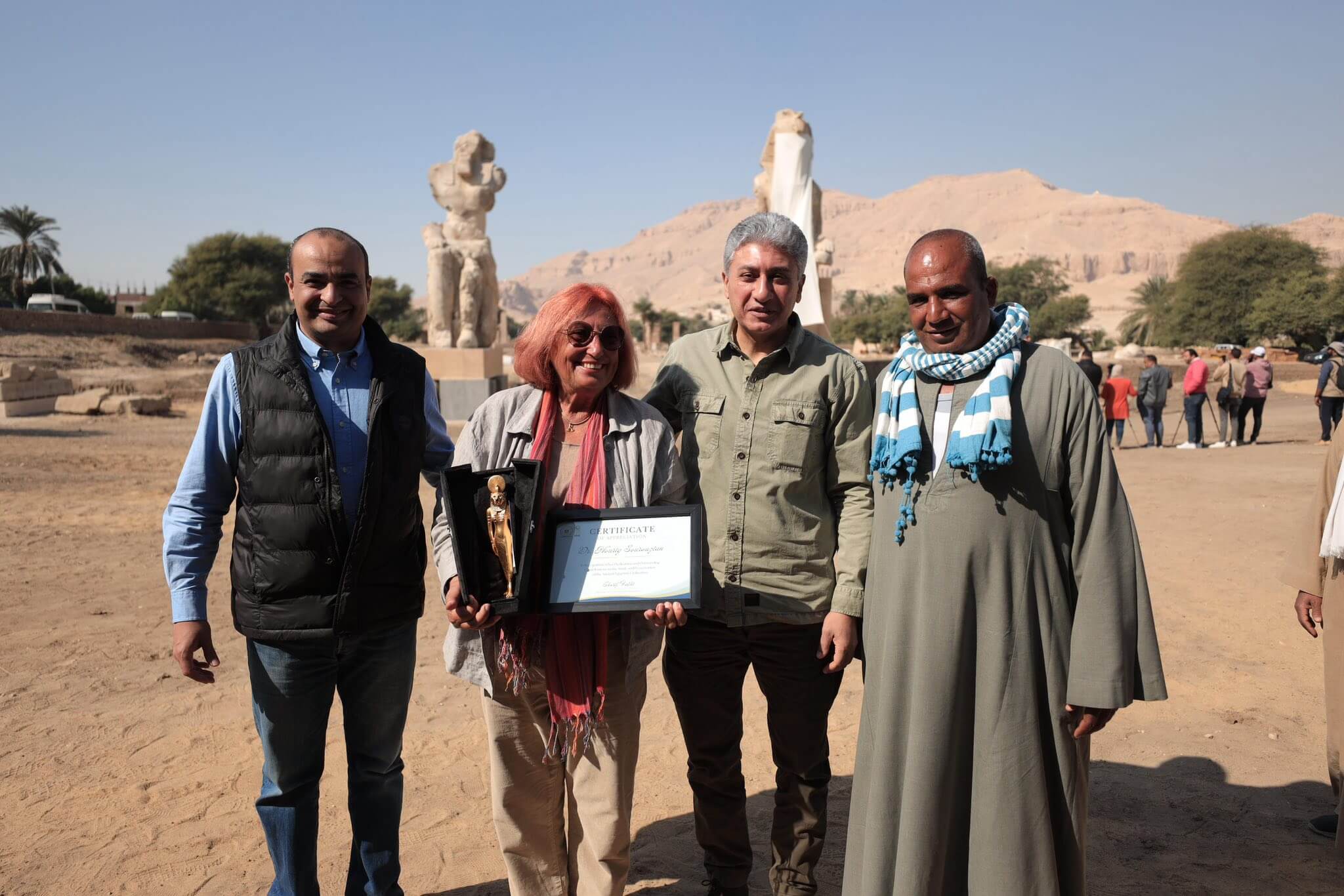
Over the years, archaeologists recovered scattered fragments of the two colossal statues from across the site. Many pieces were found in poor condition, having been submerged in Nile silt and affected by saltwater and groundwater.
Additional granite blocks forming the bases of the statues were retrieved from the open-air museum at Karnak. Restoration work began in 2006 and included cleaning, structural consolidation, 3D scanning, and the careful reassembly of the fragments.
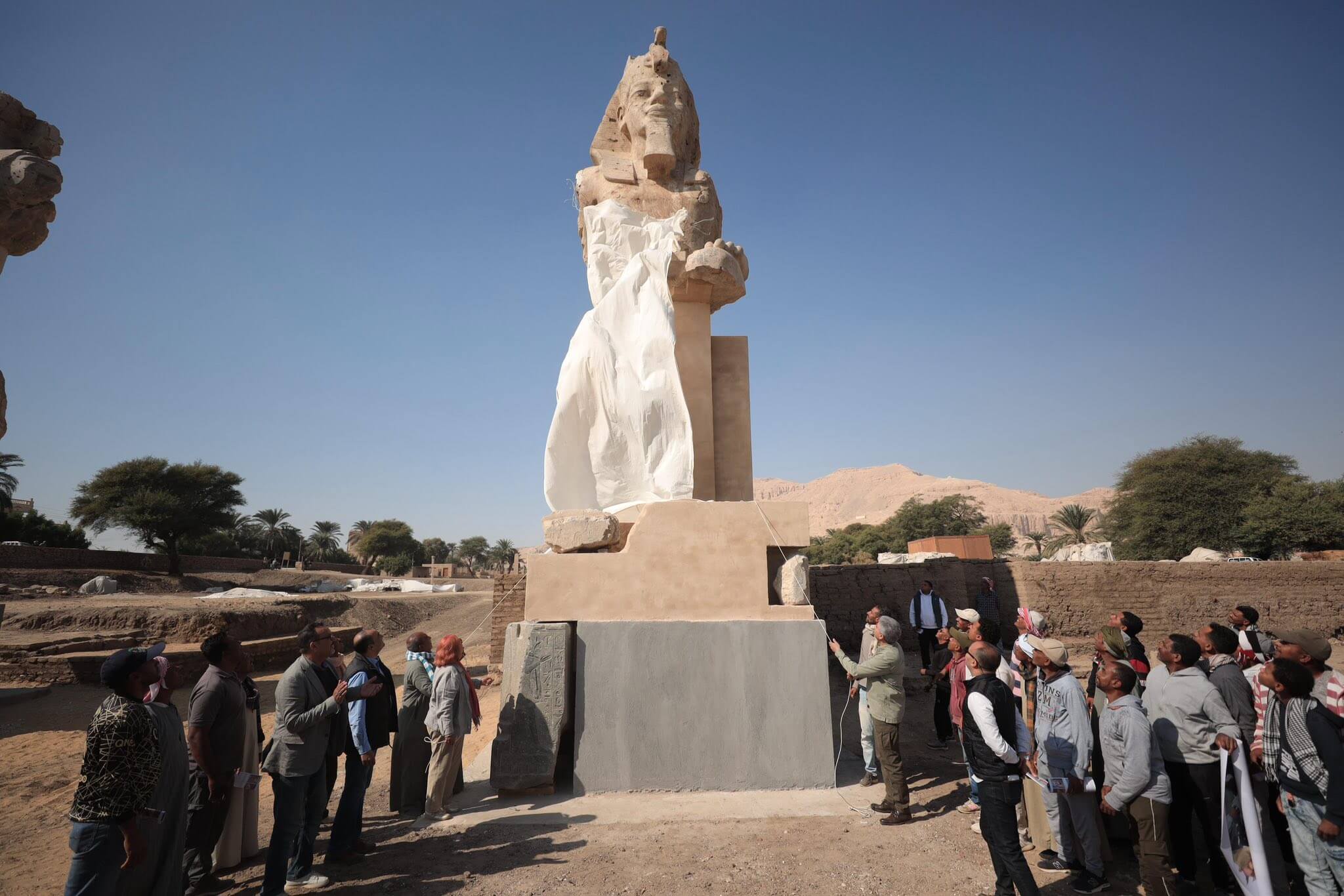
In 2025, after nearly two decades of work, the statues were finally reinstalled and raised in their original position. Each statue measures between 13.6 and 14.5 meters in height.
The statues depict King Amenhotep III seated, with his hands resting on his knees. He wears the royal nemes headdress topped by the double crown, a ceremonial beard, and the traditional royal kilt with the bull’s tail. Alongside the king are figures of royal women, including his Great Royal Wife Tiye, Princess Isis, and Queen Mutemwiya.
The sides of the throne are decorated with the sema-tawy motif, symbolizing the unification of Upper and Lower Egypt. Traces of original color remain visible on some decorative elements.
The mortuary temple of Amenhotep III was constructed during the first half of the 14th century BCE over a period of nearly 39 years. It was the largest mortuary temple ever built, surpassing even later monuments in scale and architectural richness.
The temple suffered catastrophic damage following a powerful earthquake around 1200 BCE and was later used as a quarry in subsequent periods. Over time, floods deposited thick layers of Nile silt across the site, leaving only the Colossi of Memnon standing in their original positions.
The restoration of the colossal statues represents a major step in preserving Egypt’s cultural heritage and reviving monuments that once defined the landscape of ancient Thebes. It demonstrates how scientific conservation can bring monumental architecture back into meaningful dialogue with its original setting.
The project is also part of a broader strategy to enhance the West Bank of Luxor as a cultural destination, while maintaining full respect for the site’s archaeological value. Ongoing documentation and conservation work at nearby monuments further contribute to a more informed and immersive visitor experience.
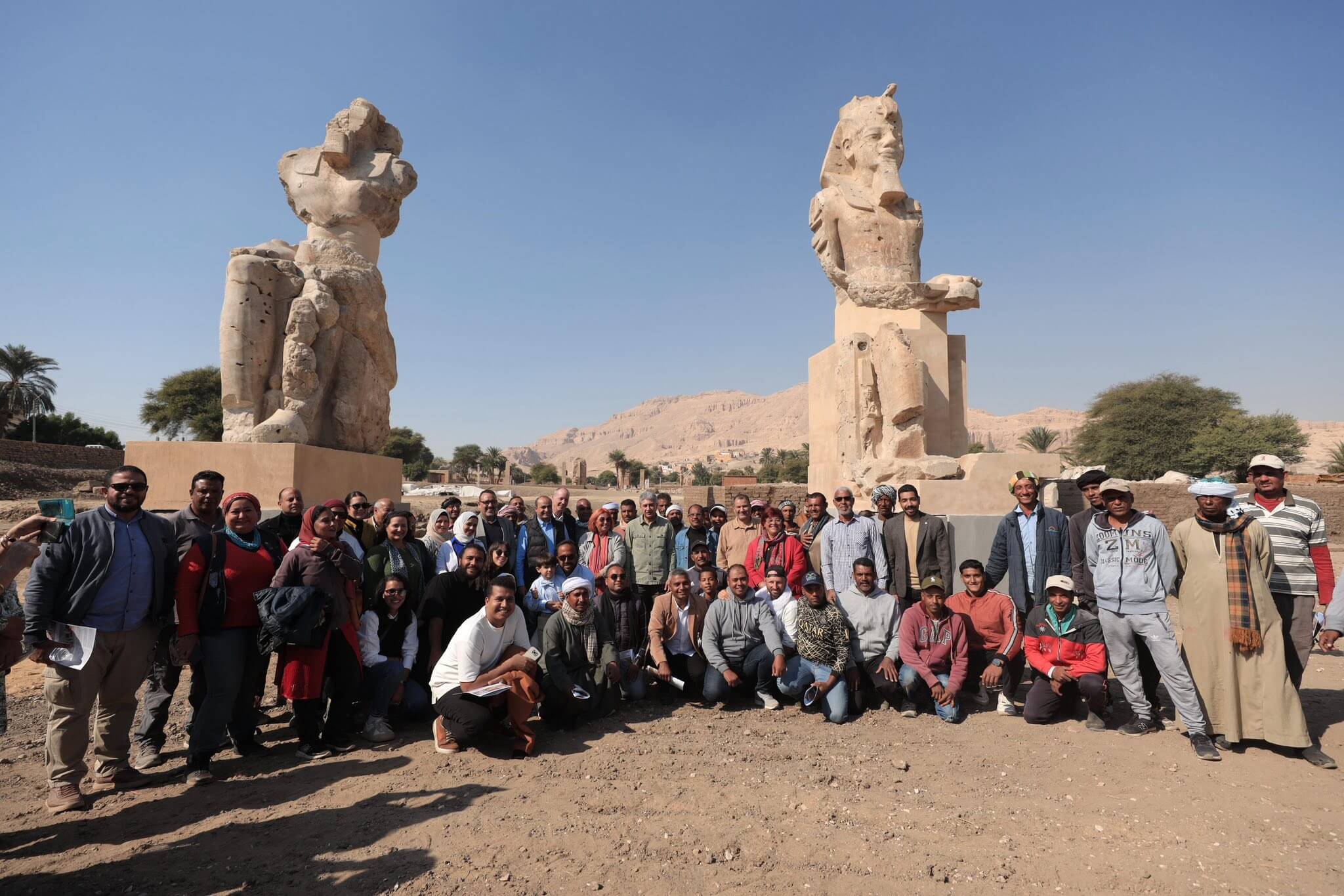
The successful unveiling of these statues reflects years of dedication, technical expertise, and international cooperation. As conservation work continues at the mortuary temple and across Luxor’s West Bank, each restored monument helps reconnect modern visitors with the grandeur of ancient Egypt.
Projects like this ensure that the legacy of Amenhotep III, one of Egypt’s most influential pharaohs, will continue to be experienced and understood for generations to come.
